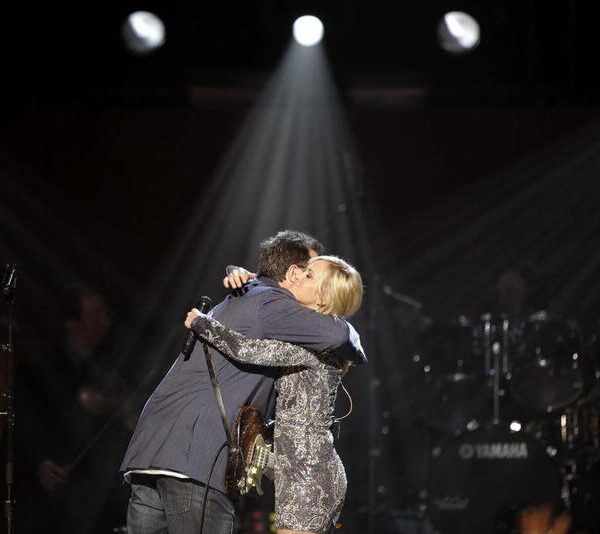
On April 4, 2011, Las Vegas played host to a special celebration of country music that transcended awards, commercial accolades, and chart success. The Academy of Country Music Awards (ACM) Girls’ Night Out:
Superstar Women of Country was a meticulously curated event designed to honor the profound impact of women in country music.
Yet amid the glittering tributes to icons such as Reba McEntire, Miranda Lambert, and Loretta Lynn, one performance would stand apart as an enduring testament to artistry, faith, and emotional resonance: Carrie Underwood’s rendition of “How Great Thou Art,” performed as a duet with Vince Gill.
The Context of Girls’ Night Out
The ACM Girls’ Night Out series was conceived not as a traditional awards show but as an intimate celebration of female contributions to country music, a genre historically dominated by male artists.
By 2011, it had become a revered platform for both legends and rising stars to highlight their artistry beyond commercial metrics.
The evening’s structure combined performances, storytelling, and tributes, showcasing not only the technical mastery of the performers but also the deep emotional roots of the genre.
Carrie Underwood’s presence was particularly significant. She had emerged as a powerhouse since winning American Idol in 2005, and by 2011, she had firmly established herself as a multi-award-winning artist with multiple ACM wins, Grammy accolades, and platinum albums.
Her ability to balance commercial appeal with technical skill and emotional authenticity positioned her as a bridge between generations: a modern star deeply respectful of the genre’s traditions.
Choosing “How Great Thou Art”
Selecting “How Great Thou Art” for the performance was both bold and deliberate. The hymn, renowned for its spiritual depth and complex vocal demands, is a staple of religious and traditional musical repertoires.
Its structure challenges even the most seasoned vocalists, requiring a combination of dynamic control, emotional nuance, and range, particularly in climactic passages.
Pairing Carrie Underwood with Vince Gill, an artist celebrated for his warm tenor, masterful guitar work, and understated yet commanding presence, was a strategic choice that would amplify the song’s emotional power.
Gill’s decades of experience in country music, with accolades spanning Grammy awards, CMA honors, and countless collaborations, provided the perfect counterbalance to Underwood’s soaring, expressive vocals.
Together, they embodied the essence of cross-generational collaboration, blending reverence for the past with contemporary interpretation.
The Staging and Musical Arrangement
Unlike many awards-show performances, which often emphasize spectacle over substance, this rendition was intentionally minimalistic. The stage was softly lit, focusing attention squarely on the performers rather than elaborate sets or choreography.

Vince Gill opened the performance alone, accompanying himself on acoustic guitar. His approach was gentle, measured, and reverent, establishing a tone of intimacy that immediately captured the audience’s attention.
Carrie Underwood entered gradually, her presence commanding yet unobtrusive. As she joined Gill, her vocal delivery combined precision with raw emotion, rising effortlessly through the song’s demanding ranges without ever feeling strained or contrived.
Harmonies were carefully woven, with Gill providing subtle, stabilizing layers behind Underwood’s voice. The interplay was delicate yet powerful: each note enhanced the other, creating a texture that felt both expansive and deeply personal.
This restraint in staging allowed the spiritual and emotional weight of the hymn to resonate fully. The audience was invited not merely to listen but to experience the song, each line imbued with sincerity and gravity.
The Audience Reaction
The moment Carrie and Vince hit the climactic passages of “How Great Thou Art,” the audience responded instinctively. Witnesses described:
Standing ovations, with many rising to their feet mid-performance.
Tears among both fans and industry veterans, reflecting the deep emotional connection the music evoked.
A profound hush in the room, broken only by the resonance of the performers’ voices and the subtle strumming of the guitar.
Critics quickly noted that the duet transcended the typical awards-show format. Rather than a fleeting showcase, it became an emotional apex, uniting the audience in shared reverence.
Media outlets widely reported that it defined Girls’ Night Out 2011, and clips from the performance went viral online, garnering millions of views and creating discussions about the power of hymns in contemporary country music.
Technical and Emotional Brilliance
Carrie Underwood’s Vocals
Underwood’s voice was characterized by clarity, strength, and control. She managed to:
Navigate the hymn’s wide vocal range without strain.

Deliver emotional inflection on every line, from quiet reverence to climactic exultation.
Maintain dynamic consistency, balancing power with subtlety to enhance the song’s spiritual narrative.
Her interpretation was both personal and universal. Critics noted that she communicated faith and awe without theatricality, allowing listeners to connect with the song on a spiritual or emotional level, regardless of religious background.
Vince Gill’s Contribution
Vince Gill’s role was more than accompaniment; it was foundational. His guitar work set a rhythmic and harmonic framework that supported Underwood’s soaring vocals.
His tenor harmonies added warmth and depth, complementing Underwood without overshadowing her performance. Gill’s approach exemplified humility and musical maturity, demonstrating how restraint and subtlety can enhance emotional resonance.
Together, their voices intertwined seamlessly, creating a duet that felt organic, authentic, and spiritually uplifting.
About the Author